For decades, beauty brands in the Middle East have treated consumers as one. Despite being home to more than 40 distinct ethnic and ethnoreligious groups, brands have often taken a one-size-fits-all approach to understanding beauty in the region, assuming that consumer expectations, demands, and desires are uniformly the same.
While a one-size-fits-all approach may once have been enough, today’s Middle Eastern consumers are demanding a new level of cultural relevance and relatability. A mother of four in Riyadh doesn’t have the same beauty needs as a serial entrepreneur in Dubai, just like a woman with textured hair doesn’t have the same haircare routine as someone with fine, straight hair.
“The region is opening up in ways that feel genuinely historic. Today, the Middle East sits at the center of global conversations across fashion, music, sport, hospitality and culture. With that has come a new sense of confidence and pride among consumers,” Shubham Poddar, founder of Arab beauty brand AÏZA, told BeautyMatter.
For decades, quality and prestige beauty meant imported products from legacy names. Today, that’s changing. “Consumers in the region now want brands that reflect who they are and where they come from—products built around their climate, their features, their rituals and the ingredients they grew up with,” added Poddar. But choosing the local options no longer means compromising on quality.
Consumers in the region no longer want products made for the West and imported into the Middle East. They’re now looking for beauty that reflects the realities of living in the region. This looks like foundations that match their skin tone exactly. Moisturizers that are formulated to withstand 45° heat and humidity, while also being able to provide enough hydration following prolonged air conditioning exposure. Yet despite having access to nearly every global beauty brand, most consumers still find it difficult to find products that genuinely work for their skin types and lifestyles in the region.
Today’s Middle Eastern consumer is a modern-day nomad, with one of the highest abilities to travel, experience multiple cultures within a single country, and access the very best of global beauty. But they also experience harsh climate struggles unlike anywhere else in the world. “A formula made in Italy, sold in a French pharmacy, and formulated for a woman living in dry, cold environments can’t work here,” said Sruti Gudavalli, founder of Moondune. “For a Middle Eastern consumer with so much access, the irony lies in the fact that very little innovation originates from their own environment.”
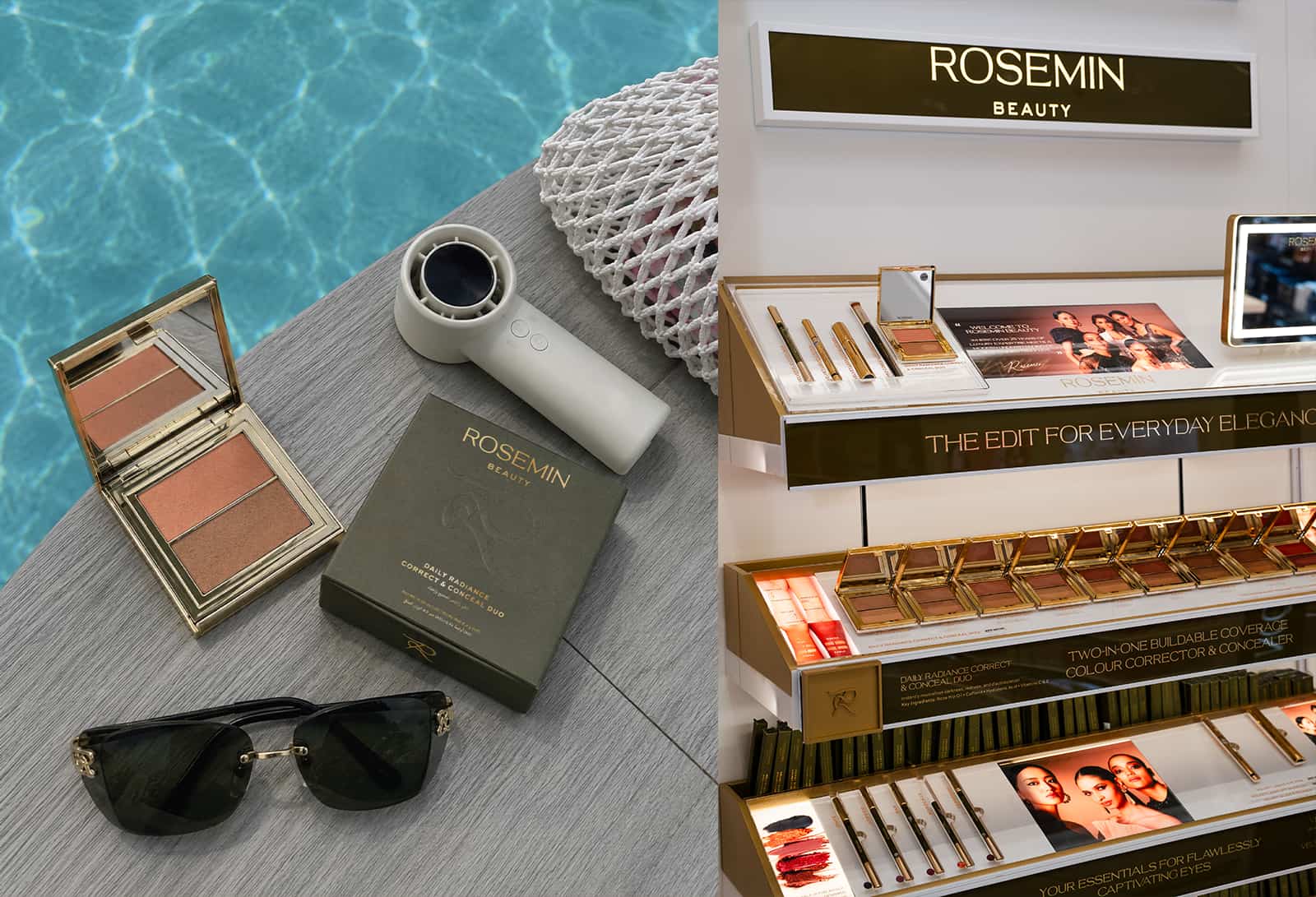
While the paradox is striking, it is now creating one of the biggest opportunities in the industry. As consumer expectations evolve, the Middle East is shifting from merely being a market of consumption to one of creation—where brands and products are being built within the region to meet its specific beauty needs from day one. At AÏZA, that means reimagining ancestral Arab beauty rituals through a modern lens. Ranging from a modern reinterpretation of bakhoor repackaged as a protective hair mist to Bayt Blend, a purifying hair mask that blends heritage ingredients sidr and mint with proven active ingredients from global labs. Meanwhile, Moondune is developing what it describes as the region’s first climate-intelligent skincare brand, formulating products specifically made to withstand the harsh environmental challenges of living in the Middle East. And at Rosemin Beauty, hyperpersonalization takes on a new form through shade-matched complexion products that recognize and celebrate the region’s diversity of skin tones and undertones rather than relying on Western shade systems.
“Today’s consumer is incredibly educated. She understands ingredients, formulation, performance, and authenticity. She wants products that have been developed with her lifestyle, climate, skin tone, and beauty rituals in mind, not adapted as an afterthought,” said Rosemin Opgenhaffen, founder of Rosemin Beauty.
With an abundance of rich ingredients packed with benefits ranging from anti-aging and moisturizing to pigmentation, smoothing, and acne control, along with access to global science and innovation, the Middle East is perfectly primed for its own beauty renaissance to emerge. “Every major beauty movement has come from a place of deep cultural relevance—Ayurveda emerged from India, K-beauty from Korea—the Arab world has an equally rich cultural heritage and now is its moment to shine,” said Gudavalli.
However, A-beauty isn’t just about creating products in the region. Instead, it’s about creating products that reflect the region’s extraordinary diversity. And that’s what makes building for the market much more complex than one would expect. “In the Middle East, when we speak of diversity, it’s unlike anything else in the world. Ranging from Arab and South Asian to Persian, African, mixed-heritage, and everything in between—everyone’s definition of undertones and pigmentation is different,” said Opgenhaffen.
Consumers today expect representation, not generalization. Rather than catering to everyone, brands need to get more specific about who exactly they’re catering to.“The Middle East has never had a single beauty archetype—and that’s precisely what makes building for the market so complex,” said Opgenhaffen.
As the Middle East’s beauty landscape continues to evolve, both from a consumption and a creative perspective, the biggest barrier to growth isn’t innovation but perception. Despite becoming one of the fastest growing markets, projected to reach $42.5 billion by 2031 and growing at a CAGR of 5.34%, many brands continue to rely on outdated ideas about the consumers they’re trying to reach. “For many, there’s this assumption that if a woman wears a hijab, she doesn’t need haircare, or if she wears a niqab, skincare and makeup become less important. When in reality it’s often the opposite,” said Poddar. Beauty in the region is deeply personal, rooted in elaborate rituals and skincare routines that are not done for other people to see but for how good it makes them feel. “That’s a very different relationship with beauty, and one the world often underestimates,” added Poddar.
Another misconception is that men don’t care about beauty here, making them the most ignored consumer cohort when it comes to marketing, product development, and innovation. “Men in the Middle East are among the most groomed in the world and know their skin and concerns incredibly well,” said Gudavalli. This means they are drawn to advanced skincare and grooming products and will continue to grow into an extremely promising segment of the market. Beyond fragrances and beard care, men’s beauty and grooming represent one of the industry’s biggest untapped opportunities in the region. “Moondune is intentionally built to be unisex in terms of formulation, packaging, and branding, so that we can cater to this extremely ignored but important segment of consumers,” added Gudavalli. The brand currently offers an AM and PM serum.
And finally, the most persistent misconception is that Arab consumers inherently prefer Western brands. In reality, the market lacked homegrown brands capable of competing with international counterparts in performance, efficacy, and innovation. “The moment you build products that genuinely compete at a global level, while also reflecting the region’s culture and rituals, consumers respond incredibly strongly,” added Poddar. There are shared rituals, ingredients, and cultural values across the region, which means products can travel quickly and the word can spread fast, but marketing rarely does. “Riyadh isn’t Jeddah; Dubai isn’t Abu Dhabi. The product can stay the same, but the storytelling, creators you work with, and even the channels you prioritize need to feel local,” added Poddar.